
May 19, 2026 | Car Accidents
After a car accident in Blythewood, South Carolina, the steps you take to document your injuries can shape the outcome of your entire claim. Whether you suffered whiplash, broken bones, or soft tissue damage, thorough documentation creates the foundation insurers and courts rely on to evaluate your case. South Carolina operates under a tort system, meaning the at-fault driver’s insurance is responsible for your injuries. That makes building a strong, well-organized record essential. Below, you will find a practical guide to preserving evidence, gathering medical records, and protecting your right to full compensation under South Carolina law.
If you need guidance after a Blythewood car accident, Jeffcoat Injury and Car Accident Lawyers can help you understand your options. Call (803) 200-2000 or reach out online to get started.
Why Injury Documentation Matters for Your Personal Injury Lawyer in Blythewood South Carolina
Strong documentation is the backbone of any successful personal injury claim in South Carolina. Under the state’s tort system, bodily injury claims may include medical expenses, lost wages, and pain and suffering. Each category demands clear, organized proof. Without it, insurers may undervalue or deny your claim.
South Carolina’s modified comparative fault system under SC Code § 15-38-15 adds another layer of urgency. If you are found 51% or more at fault, you cannot recover compensation. If your fault is 50% or less, your recovery is reduced by your percentage of responsibility. Defendants responsible for less than 50% of total fault pay only their proportional share of indivisible damages. Documentation gaps could shrink or eliminate your recovery. Thorough records help establish the other party’s liability and protect your compensation.
💡 Pro Tip: Start a dedicated folder on your phone or computer the same day as your accident. Save every photo, receipt, and medical document in one place so nothing gets lost.

What Counts as a "Loss" Under South Carolina Law
South Carolina law recognizes a broad range of recoverable losses in personal injury actions. The South Carolina Tort Claims Act under SC Code § 15-78-30(f) defines "loss" to mean bodily injury, disease, death, or damage to tangible property, including lost wages and economic loss to the person who suffered the injury, disease, or death, pain and suffering, mental anguish, and any other element of actual damages recoverable in actions for negligence, but does not include the intentional infliction of emotional harm. While this applies specifically to government entity claims, South Carolina negligence law permits recovery of similar damages in private tort actions.
Medical Expenses and Treatment Records
Every medical visit following your accident creates evidence. Request copies of emergency room records, diagnostic imaging, surgical reports, physical therapy notes, and prescription logs. These records connect your injuries to the collision and establish care costs. If you delayed treatment, document the reason, as gaps can raise questions about injury severity.
Lost Wages and Economic Harm
If injuries kept you from working, pay stubs and employer statements become critical evidence. Gather documentation showing normal earnings, missed shifts, reduced hours, or lost bonuses. Self-employed individuals should collect tax returns, invoices, and profit-and-loss statements. Economic loss may include diminished earning capacity if injuries affect your long-term ability to work.
💡 Pro Tip: Ask your employer to provide a written statement on company letterhead confirming dates missed and wages lost. This carries more weight than verbal confirmation.
Pain, Suffering, and Mental Anguish
These non-economic damages are real and recoverable, but require different proof. Keep a daily journal describing pain levels, emotional state, sleep disruptions, and daily limitations. Entries like "could not pick up my child today due to back pain" paint a vivid picture for adjusters and juries. Testimony from family members or mental health professionals can further support these claims.
Steps to Preserve Accident Evidence in Blythewood SC
Acting quickly after a crash gives you the strongest foundation. Evidence disappears fast. Skid marks fade, surveillance footage gets overwritten, and memories become less reliable. The following steps help you build a solid record.
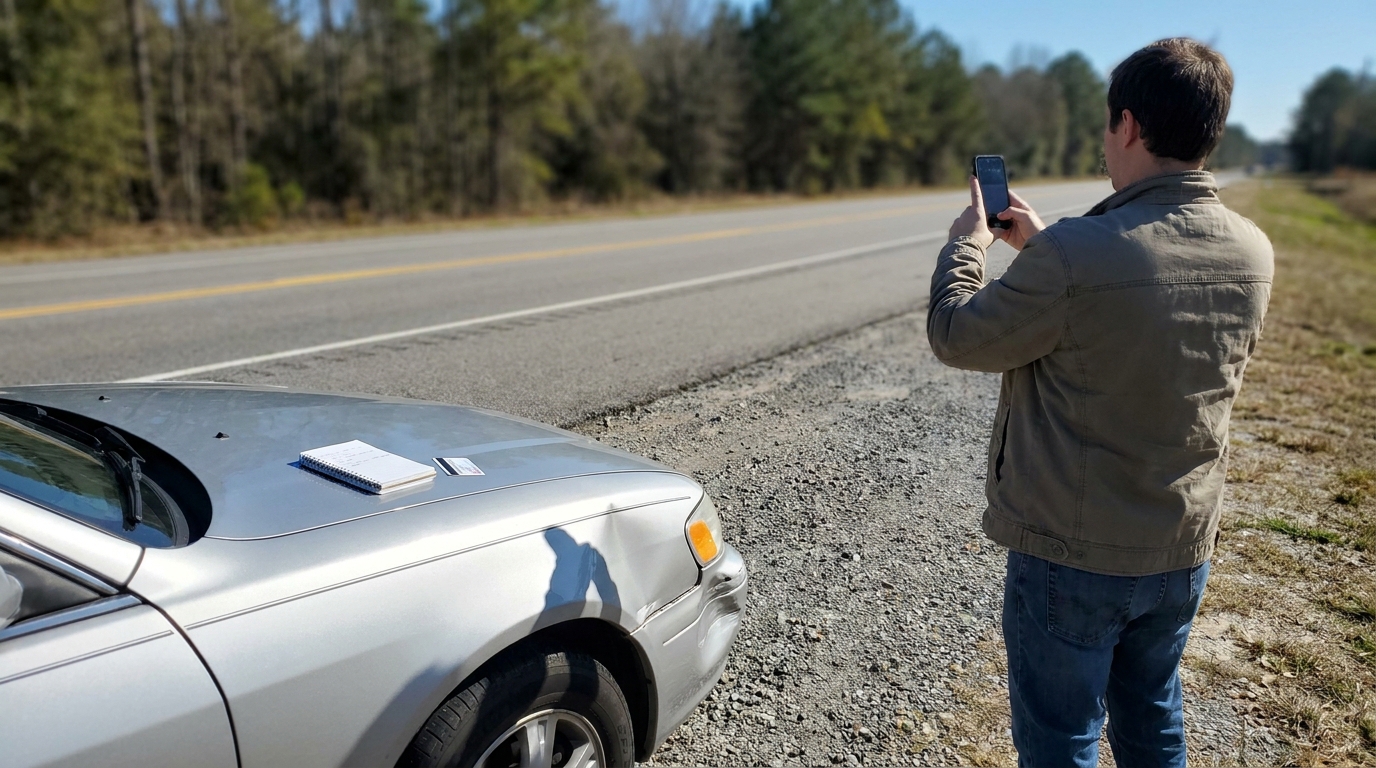
- Photograph everything at the scene. Capture vehicle damage, road conditions, traffic signals, debris, and visible injuries from multiple angles.
- Seek medical attention immediately. Even if you feel fine, some injuries take hours or days to manifest. Prompt evaluation creates a timestamp linking your condition to the accident.
- Collect contact and insurance information from all drivers, passengers, and witnesses.
- Preserve physical evidence. Keep damaged clothing, broken personal items, and vehicle parts in a safe location.
- Save all communications. Screenshot text messages, emails, or social media posts related to the accident, and avoid posting about injuries publicly.
If you are unsure what to do immediately after a collision, reviewing what Blythewood residents should do right after a car accident can help you avoid common mistakes.
💡 Pro Tip: Request nearby business surveillance footage within 48 hours. Many systems record over old footage within days, and this evidence can be irreplaceable.
Why You Cannot Rely on the Official Accident Report Alone
Many assume the police report will carry their case, but South Carolina law limits its use. Under SC Code § 56-5-1340, accident reports filed by involved persons are confidential and cannot be used as trial evidence in civil or criminal proceedings arising from the accident. You must independently build your case through medical records, photographs, witness statements, and other personal documentation.
The SC DMV may disclose certain information from accident reports, such as identity and insurance details of other participants. This can help initiate a claim, but does not replace the comprehensive evidence needed to prove fault and damages.
Key Deadlines: The Statute of Limitations for Blythewood Injury Claims
Time limits apply to every personal injury claim in South Carolina, and missing them can permanently bar recovery. Under SC Code § 15-3-530(5), the statute of limitations for personal injury claims is three years. For wrongful death actions under § 15-3-530(6), the three-year period begins on the date of death.
Certain individuals may receive limited extensions. Under SC Code § 15-3-40, minors under 18 and persons legally insane at the time of accrual may have the limitation period tolled during their disability. Courts generally interpret these exceptions narrowly, and tolling does not apply automatically. Consulting an attorney helps determine whether an extension may apply.
| Claim Type | Filing Deadline | Governing Statute |
|---|---|---|
| Personal injury (car accident) | 3 years from date of injury | SC Code § 15-3-530(5) |
| Wrongful death | 3 years from date of death | SC Code § 15-3-530(6) |
| Tort claim against government entity | 2 years from discovery of loss | SC Code § 15-78-110 |
Claims against government entities carry a shorter deadline. Under SC Code § 15-78-110, an action must be filed within two years after the loss was or should have been discovered. If a verified claim was filed within one year in accordance with SC Code § 15-78-80 and that claim was subsequently disallowed or rejected, the deadline to file an action may extend to three years after the loss was or should have been discovered. SC Code § 15-78-120 caps individual recovery at $300,000 per person per occurrence for government claims, with a total cap of $600,000 per occurrence.
💡 Pro Tip: Do not wait until the deadline approaches. Evidence degrades, witnesses relocate, and medical records become harder to obtain. Early action protects your case.
Understanding Your Insurance Coverage After a Blythewood Accident
South Carolina requires all drivers to carry minimum liability coverage, and knowing policy limits matters when pursuing a claim. The state mandates minimums of $25,000 per person for bodily injury, $50,000 for all persons injured in one accident, and $25,000 for property damage. South Carolina law also requires uninsured motorist coverage at the same 25/50/25 limits, typically with a $200 deductible, protecting you if the at-fault driver has no insurance or flees.
These minimum amounts may not fully cover serious injuries. If damages exceed the at-fault driver’s policy limits, your own uninsured or underinsured motorist coverage may help bridge the gap. A personal injury lawyer in Blythewood can review your policies and identify all available recovery sources.
💡 Pro Tip: Keep a copy of your auto insurance declarations page in your accident folder. Knowing coverage limits before disputes arise puts you in a stronger negotiating position.
Frequently Asked Questions
1. What types of evidence should I gather to document injuries after a Blythewood car accident?
Collect medical records, photographs of injuries and the accident scene, pay stubs showing lost wages, and a journal documenting pain and daily limitations. Witness contact information, receipts for out-of-pocket expenses, and insurance correspondence also strengthen your claim. Broader documentation makes it harder for insurers to dispute damages.
2. How long do I have to file a personal injury claim in South Carolina?
South Carolina generally allows three years from the date of injury to file a personal injury lawsuit under SC Code § 15-3-530(5). Claims against government entities may have a shorter two-year deadline under SC Code § 15-78-110. Because tolling exceptions are limited and fact-dependent, consult an attorney promptly to avoid missing critical deadlines.
3. Can the police accident report be used as evidence in my case?
No. Under SC Code § 56-5-1340, accident reports filed by involved parties are confidential and cannot be used as trial evidence. You must independently gather medical records, photographs, and witness statements to build your injury documentation in SC.
4. What happens if I am partially at fault for the accident?
South Carolina follows a modified comparative fault system under SC Code § 15-38-15. If you are partially at fault, your compensation is reduced by your percentage of responsibility. If you are 51% or more at fault, you cannot recover compensation. Defendants responsible for less than 50% of total fault are only liable for their proportional share of indivisible damages. Strong evidence helps minimize disputes over fault allocation.
5. Does South Carolina require uninsured motorist coverage?
Yes. South Carolina law mandates uninsured motorist coverage at minimum 25/50/25 limits, generally with a $200 deductible. This coverage applies if you are hit by an uninsured driver or involved in a hit-and-run, providing a financial safety net when the at-fault party cannot pay.
Protect Your Claim With Thorough Documentation
Documenting your injuries after a Blythewood car accident is one of the most important steps to protect your right to fair compensation. From medical records and wage statements to photographs and personal journals, every piece of evidence strengthens your position under South Carolina’s tort system. Acting quickly, understanding deadlines, and organizing records give you the best chance at full recovery.
The team at Jeffcoat Injury and Car Accident Lawyers is ready to help you navigate the claims process and fight for the compensation you deserve. Call (803) 200-2000 today or contact us online for a free consultation.