
June 28, 2026 | Car Accidents
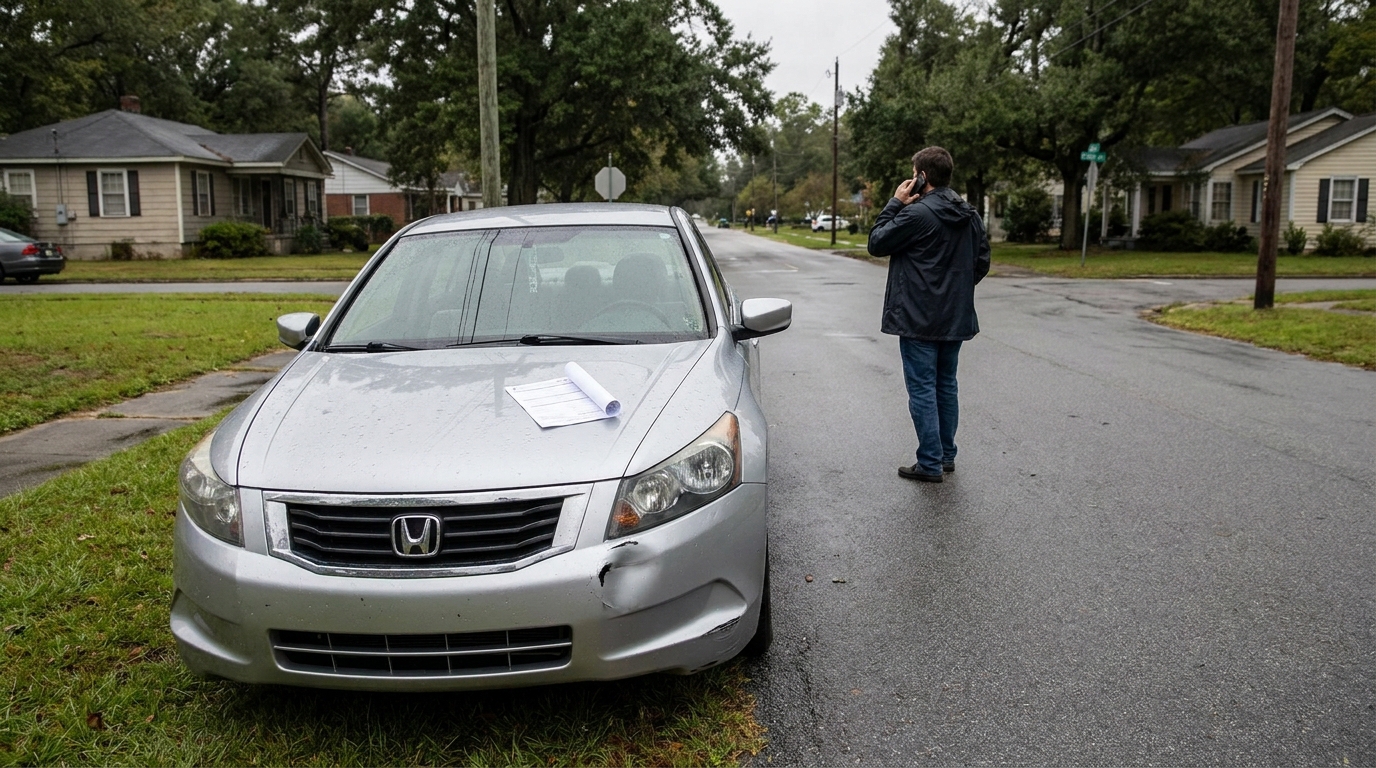
Stranded After a Fender Bender in Columbia? Here’s Your Game Plan
Key Takeaways: When police cannot respond to a minor wreck in Columbia, you remain responsible for handling the scene under South Carolina law. Officers prioritize crashes involving serious injuries or major hazards, so low-speed fender benders often don’t draw an immediate response. When no officer arrives, check for injuries, exchange information, photograph everything, gather witness details, and seek prompt medical care. If the crash caused $1,000 or more in property damage, bodily injury, or death and was not investigated, you must self-report to the SCDMV under S.C. Code Ann. § 56-5-1270 within fifteen days. South Carolina’s modified comparative negligence rule means partial fault won’t automatically bar recovery, though being found more than 50% at fault will. Your own photos and witness details become critical since DMV reports cannot be used as trial evidence. Acting quickly protects your health and preserves your right to compensation within the three-year statute of limitations.
When you call 911 after a minor collision in Columbia and learn no officer is available, it can feel like you’ve been left to handle a stressful situation alone. Law enforcement prioritizes crashes involving serious injuries or major traffic hazards, so low-speed fender benders may not draw an immediate response. South Carolina law still provides a clear framework for protecting yourself, documenting the scene, and preserving your right to recover damages.
If you were hurt in a minor car accident Columbia SC drivers experience daily, you don’t have to navigate the aftermath without guidance. The team at Jeffcoat Injury and Car Accident Lawyers is ready to help you understand your options. Call (803) 200-2000 or reach out through our contact page to discuss what happened.
Why Police May Not Come to a Minor Wreck in Columbia
Police not responding to accident scenes is more common than many drivers expect, especially for crashes with minimal property damage and no apparent injuries. Officers must triage calls, and a non-injury fender bender may fall lower on the priority list than a serious wreck across town. Departments sometimes advise drivers to exchange information and self-report rather than wait for hours.
This doesn’t mean your obligations under South Carolina law disappear. Under S.C. Code Ann. § 56-5-1210(A), drivers involved in accidents resulting in injury or death must immediately stop at the scene or as close as possible without obstructing traffic more than necessary.
💡 Pro Tip: Even when an officer cannot respond, never leave the scene of an accident involving any injury until you’ve exchanged information and rendered reasonable aid. Leaving prematurely can expose you to serious legal consequences.
Moving Your Vehicle Safely
For a minor wreck with no serious injuries, moving vehicles out of active traffic lanes is generally expected. The statutory language about not obstructing traffic implies drivers should clear the roadway when safe. You can review the full text of these duties in South Carolina’s law on stopping at an accident scene.
There’s an important exception for severe crashes. Vehicles in accidents involving great bodily injury or death generally cannot be moved without law enforcement authorization. If anyone appears seriously hurt, leave the vehicles in place and wait for help.
What to Do After a Minor Car Accident When No Officer Arrives
Knowing what to do after a minor car accident is your strongest protection when police cannot respond. Your actions in the first hour often shape whether you can later prove fault and recover medical costs or vehicle repairs. Treat the scene as if you’re building your own record, because in a minor wreck no police report may exist.
Here are practical steps to take when handling an accident without police in Columbia:
- Check for injuries and call 911 if anyone needs medical attention.
- Exchange names, contact details, driver’s license numbers, vehicle information, and insurance details with the other driver.
- Photograph all vehicles, damage, license plates, road conditions, traffic signs, and the surrounding area.
- Collect names and phone numbers of any witnesses before they leave.
- Write down your own account of how the crash happened while it’s fresh.
💡 Pro Tip: Take photos from multiple angles and distances. Wide shots establish the overall scene, while close-ups capture the specific points of impact that often determine fault.
Seek Medical Attention Promptly
Even a low-speed collision can cause injuries that surface hours or days later. Soft tissue damage, concussions, and whiplash don’t always produce symptoms at the scene. Getting evaluated promptly protects your health and creates medical documentation linking your injuries to the crash, which is valuable if you later pursue a claim.
Self-Reporting Your Crash to the South Carolina DMV
When no law enforcement officer investigates a qualifying crash, the duty to report shifts to you. Under S.C. Code Ann. § 56-5-1270, the operator or owner of a motor vehicle involved in an accident resulting in total property damage of $1,000 or more, bodily injury, or death that was not investigated by law enforcement must furnish a written report and verification of liability insurance coverage to the Department of Motor Vehicles within fifteen days of the accident. This self-report car accident SC requirement is a key step many drivers overlook.
If an officer does investigate, a different timeline applies. The completed and verified form must be returned to the Department of Motor Vehicles within fifteen days from the date the form was delivered by the officer. Failure to return the form properly verified is prima facie evidence that the vehicle was uninsured. The financial responsibility provisions appear throughout South Carolina’s motor vehicle insurance code.
If you’re unsure whether your situation triggers a filing obligation, our overview of the FR-309 form South Carolina requirements can help you understand the process before a deadline passes.
💡 Pro Tip: Save copies of every form you submit and note the date you filed. Documentation of your compliance can matter if a dispute later arises about whether your vehicle was insured.
Requesting Your Collision Report
Once a report is processed, you can obtain an official copy through the SCDMV. Drivers may request a copy online, in person at any SCDMV branch, or by mail, generally for a ten dollar fee. The official report tends to be more detailed than the paperwork received at the scene.
How Fault and Insurance Work Without a Police Report
Without an officer’s report, the drivers themselves carry more responsibility for documenting fault. South Carolina follows a modified comparative negligence approach for motor vehicle cases. Under S.C. Code Ann. § 15-1-300, contributory negligence shall not bar recovery in a motor vehicle accident action so long as your negligence is equal to or less than the negligence you must establish to recover. However, if you’re found to be more than 50 percent at fault, you’re barred from recovering, and any award you do receive is reduced in proportion to your share of fault.
Insurance coverage minimums set the baseline for many claims. South Carolina generally requires liability limits of $25,000 for bodily injury or death per person, $50,000 per accident, and $25,000 for property damage per accident under S.C. Code Ann. § 56-9-353. If an uninsured driver causes $200 or more in damage or any injury, the DMV may suspend that driver’s license and registration within sixty days unless security is deposited under § 56-9-351.
Be aware that accident reports filed with the DMV carry confidentiality protections. Under S.C. Code Ann. § 56-5-1340, no such report shall be used as evidence in any trial arising out of the accident, though the DMV may disclose insurance information to injured parties upon request. This is one reason your own photos and witness details are so important for car crash reporting SC purposes.
Protecting Your Right to Compensation in Columbia
South Carolina sets firm deadlines for bringing injury and property damage claims. The statute of limitations for personal injury or property damage from a car accident is three years from the date of the incident under S.C. Code Ann. § 15-3-530(4) and (5). These civil deadlines are separate from any DMV administrative reporting requirement.
Courts interpret deadline exceptions narrowly, so don’t assume extra time applies. In limited circumstances involving wrongful death, the three-year period may begin on the date of death rather than the crash under § 15-3-530(6). Because tolling and discovery rules are fact-sensitive, it’s wise to act well before any deadline. Working with a Columbia SC auto accident lawyer can help you preserve evidence and meet applicable timeframes.
💡 Pro Tip: Outcomes depend heavily on the specific facts of your crash. The sooner you organize your documentation, the easier it is to evaluate your options before memories fade and evidence disappears.
Frequently Asked Questions
-
Do I still need to report a fender bender if police do not show up?
In many cases, yes. If the crash caused property damage of $1,000 or more, bodily injury, or death and was not investigated by an officer, S.C. Code Ann. § 56-5-1270 generally requires you to furnish a written report and proof of insurance to the SCDMV.
-
Can I move my car after a minor wreck in Columbia?
Generally, yes, for minor crashes. State law expects drivers to avoid obstructing traffic more than necessary. However, vehicles involved in accidents with great bodily injury or death typically cannot be moved without law enforcement authorization.
-
How long do I have to file a car accident lawsuit in South Carolina?
The general deadline is three years from the date of the accident under S.C. Code Ann. § 15-3-530. Wrongful death claims may run from the date of death, but courts apply such exceptions narrowly, so timely action matters.
-
Will my DMV accident report be used in court?
No. Under § 56-5-1340, a report filed with the DMV cannot be used as evidence in a civil or criminal trial arising from the accident, though certain insurance details may be disclosed to injured parties.
-
What if the other driver was uninsured?
You may still have options. The DMV can suspend an uninsured driver’s license and registration, and your own uninsured motorist coverage may apply depending on your policy.
Moving Forward After Your Columbia Collision
Handling a minor wreck without police is manageable when you know the steps to take. By documenting the scene, seeking medical care, meeting self-reporting duties, and watching your filing deadlines, you protect both your health and your legal rights. Knowing what to do after a minor car accident gives you confidence even when an officer cannot respond.
You don’t have to sort through these South Carolina requirements alone. The dedicated team at Jeffcoat Injury and Car Accident Lawyers is ready to review what happened and explain your next steps. Call (803) 200-2000 today or send us your details online to get started.