
August 6, 2026 | Motorcycle Accidents
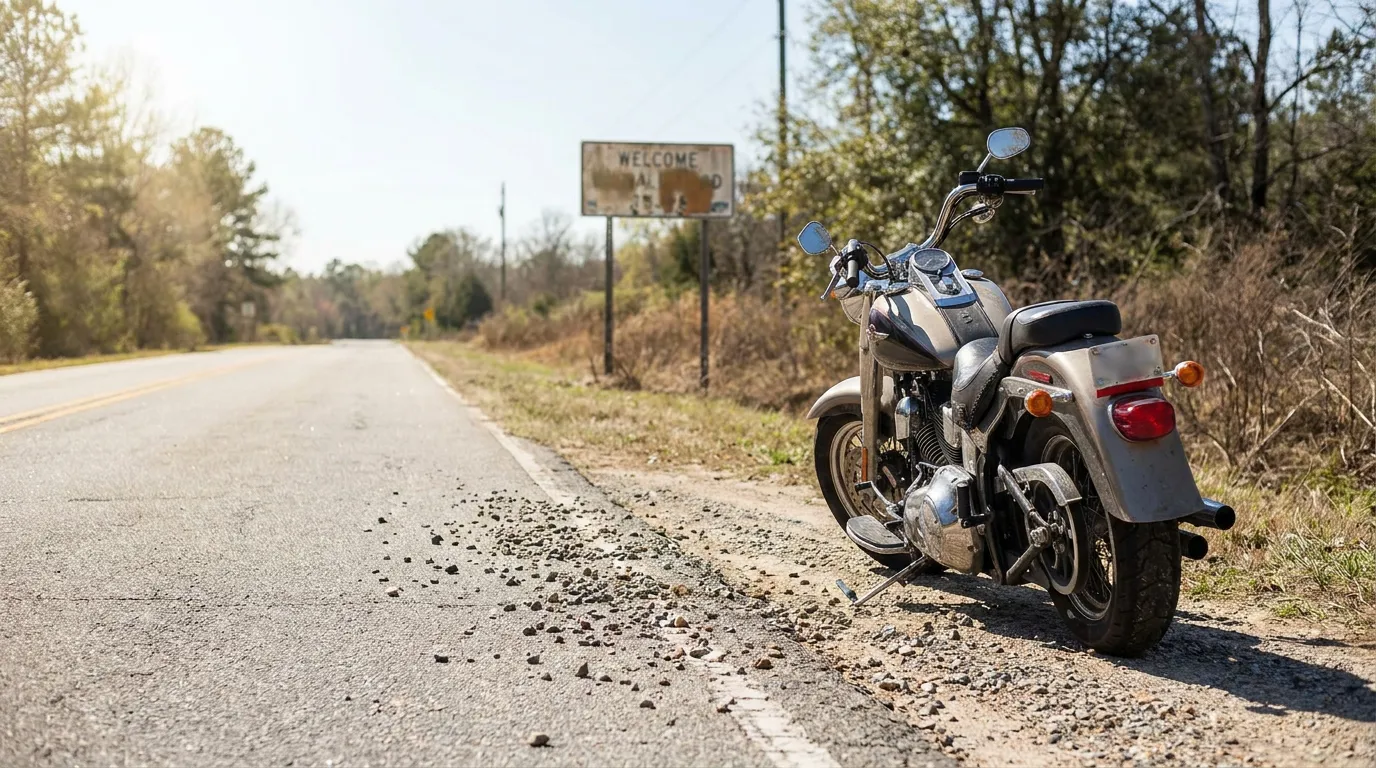
When Loose Gravel Turns a Ride Into a Crash
Key Takeaways: Liability for a Columbia motorcycle crash caused by loose gravel can fall on a government road authority, private contractor, another motorist, or a combination of parties. Claims against government entities are governed by the South Carolina Tort Claims Act, which caps damages at $300,000 per person and $600,000 per occurrence, while private parties face no such limits. Proving negligence requires showing breach of duty and causation, with notice often being the most contested issue. Strict deadlines can permanently bar recovery, and tolling exceptions are narrow. Prompt investigation and documentation are essential to preserving a strong claim.
Liability for a Columbia motorcycle crash caused by loose gravel depends on who created or failed to fix the hazard. Loose gravel is uniquely dangerous because motorcycles rely on tire traction and balance that debris can instantly destroy. Determining fault requires identifying who controlled the roadway, who knew about the danger, and whether they acted reasonably.
If you were hurt in a gravel-related wreck, the team at Jeffcoat Injury and Car Accident Lawyers is ready to help. Call (803) 200-2000 or use the firm’s confidential case review form to discuss your situation.

Who Can Be Held Responsible for a Gravel-Related Crash
More than one party may share responsibility when loose gravel causes a motorcycle crash. Sorting out liability starts with asking who placed the gravel, who maintained the road, and whether anyone had notice of the hazard. Often, the answer involves both public and private actors with different duties to riders.
Government Entities and Road Authorities
A government entity may be liable when negligent maintenance leaves a roadway covered in loose gravel. In South Carolina, road-condition claims can be brought against the state Department of Transportation. Appellate courts have addressed such disputes, including one matter where a plaintiff appealed summary judgment to SCDOT after a fatal crash.
Government liability for hazards tied to signs and warning devices is narrower than many expect. Under S.C. Code Ann. § 15-78-60(15), immunity is not waived for the absence, condition, or malfunction of a sign, signal, or warning device unless the entity fails to correct it within reasonable time after actual or constructive notice. This means a government’s knowledge of unsafe conditions and opportunity to fix them is central to whether a claim can proceed.
💡 Pro Tip: Photograph the gravel, skid marks, and any missing warning signs before cleanup. Evidence of how long a hazard existed helps establish the "notice" element these claims turn on.
Private Contractors and Other Drivers
A private contractor that spills or tracks gravel onto a public road can be a joint tortfeasor. When a private party is named alongside a governmental entity, fault division changes significantly. Under S.C. Code Ann. § 15-78-100(c), the trier of fact must return a special verdict specifying each defendant’s proportion of monetary liability.
Another motorist can also contribute to a loose gravel crash. A driver who kicks up gravel, follows too closely, or forces a rider onto a debris-covered shoulder may bear partial blame. Identifying all potentially responsible parties early helps preserve claims as evidence disappears.
How the South Carolina Tort Claims Act Shapes Your Claim
Claims against South Carolina government entities are governed by the South Carolina Tort Claims Act. This statute waives sovereign immunity in defined situations while imposing limits that don’t apply to private defendants. Under S.C. Code Ann. § 15-78-40, the State, an agency, or political subdivision are liable for their torts in the same manner as a private individual under like circumstances, subject to statutory limitations. Review the full framework in the codified South Carolina Tort Claims Act.
Liability under the Act rests on negligence principles. Under S.C. Code Ann. § 15-78-20, liability is based upon traditional tort concepts of duty and the reasonably prudent person’s standard of care. This supports arguments that a government failed to reasonably maintain a roadway free of loose gravel.
A verified claim is an optional procedural step that can affect deadlines. Under S.C. Code Ann. § 15-78-80(a), a verified claim for damages, setting forth the circumstances which brought about the loss, the extent of the loss, the time and place the loss occurred, the names of all persons involved if known, and the amount of the loss sustained, may be filed with the State Fiscal Accountability Authority or the agency employing the relevant employee (for state claims), with the political subdivision (for claims against political subdivisions), or with the Attorney General when the proper defendant is in doubt. Filing a verified claim is not a required administrative prerequisite to filing a lawsuit, but doing so can extend the statute of limitations from two to three years under § 15-78-100.
Damage Caps on Government Claims
Recovery against government entities is capped regardless of agencies involved. Under S.C. Code Ann. § 15-78-120(a), no single person may recover more than $300,000 for loss arising from a single occurrence, and total recovery may not exceed $600,000 regardless of how many agencies are involved. Proposed legislation seeks to raise these figures.
| Type of Defendant | Typical Recovery Framework |
|---|---|
| Government entity (SCDOT, city, county) | Subject to statutory caps under § 15-78-120(a) |
| Private contractor | Generally no statutory cap; fault apportioned under § 15-78-100(c) |
| Another private motorist | Standard negligence rules; no government cap |
💡 Pro Tip: Because caps limit recovery from public entities, investigate whether a private contractor or another driver also shares fault, since those parties aren’t shielded by the same limits.
Proving Negligence in a Loose Gravel Motorcycle Crash
Winning a road hazard case requires proving negligence by a preponderance of the evidence. That means showing it’s more likely than not that a responsible party breached a duty and caused your injuries. Riders typically build this proof from:
- Police reports and scene documentation
- Photographs and video of the gravel and roadway
- Witness statements about hazard duration
- Maintenance and complaint records showing notice
- Medical records and accident reconstruction
Notice remains one of the most contested issues. Whether a government entity had actual or constructive notice of the gravel, and reasonable time to correct it, can determine whether a claim survives. Courts weigh timing, visibility, and duration differently in each case.
💡 Pro Tip: Request your crash report and seek medical care promptly. Treatment gaps can give insurers ammunition to minimize your claim.
Deadlines That Can Make or Break Your Claim
Every motorcycle accident lawsuit in SC is bound by a statute of limitations. South Carolina Title 15, Chapter 3 sets time limits for civil actions, available in the state’s civil limitation statute. For government claims, a shorter two-year deadline under the Tort Claims Act generally applies, extendable to three years if a verified claim is first filed. Courts have strictly enforced these deadlines, affirming dismissal in one road-condition case where actions were barred.
The clock generally starts under a discovery standard. Courts explain that the test is whether circumstances would put a person of common knowledge on notice that some right was invaded or a claim might exist. Prior precedent held the period can begin when an injured party witnessed the events causing loss. Review this discussion of the two-year deadline to sue SC government.
Tolling and the Discovery Rule
Limited exceptions may pause the limitations clock, but courts interpret them narrowly. Under S.C. Code Ann. § 15-3-40 (as cross-referenced by § 15-78-110 of the South Carolina Tort Claims Act), disability periods are not counted when a person entitled to bring an action under Chapter 78 is under eighteen years of age or insane at the time the cause of action accrued, subject to statutory caps: the period cannot be extended more than five years by any such disability (except infancy), nor longer than one year after the disability ceases. Separately, § 15-3-100 provides that stays by injunction or statutory prohibition aren’t part of the time limit. These don’t apply automatically, so don’t assume tolling extends your deadline without careful factual review.
Why a Columbia Motorcycle Accident Lawyer Can Strengthen Your Case
A Columbia motorcycle accident lawyer can help identify every liable party and preserve time-sensitive evidence. These cases often blend municipal liability with private negligence, and each defendant may raise different defenses, deadlines, and damage limits. Working with a Columbia motorcycle accident lawyer who understands both the Tort Claims Act and negligence rules helps you avoid procedural traps.
Experienced advocacy matters when insurers undervalue serious injuries. A trusted legal team can quantify losses, negotiate firmly, and prepare to litigate when offers fall short. Outcomes depend on specific facts, but careful preparation gives injured riders stronger footing.
Frequently Asked Questions
1. Can I sue the city of Columbia if gravel on a road caused my crash?
Possibly, if the city controlled the road and failed to reasonably maintain it. A claim against a government entity is governed by the Tort Claims Act and requires showing notice of the hazard and reasonable opportunity to correct it.
2. How long do I have to file a motorcycle accident lawsuit in SC?
Deadlines are set by Title 15, Chapter 3, and government claims involve shorter windows. Consult a lawyer promptly rather than assume you have the maximum period.
3. What if both a contractor and a government agency are at fault?
A jury may apportion fault among defendants. Under § 15-78-100(c), when a private joint tortfeasor is named alongside a governmental entity, the trier of fact specifies each defendant’s share of monetary liability.
4. Are damages limited in a claim against a government entity?
Yes, statutory caps generally apply. Under § 15-78-120(a), recovery is typically capped at $300,000 per person and $600,000 total per occurrence.
5. Does the discovery rule automatically extend my deadline?
No, courts apply it narrowly. The limitations period may begin once a reasonable person would be on notice a claim exists, so don’t rely on tolling without careful review.
Protecting Your Rights After a Gravel Crash
Liability for a loose gravel motorcycle crash in Columbia can rest with a road authority, private contractor, another driver, or a combination of parties. Because the Tort Claims Act imposes unique procedures and caps, and civil deadlines are strictly enforced, prompt investigation and documentation are essential.
If loose gravel left you or a loved one hurt, Jeffcoat Injury and Car Accident Lawyers is ready to review the facts and explain your options. Call (803) 200-2000 today or send a message through the firm’s online contact page to take the next step.